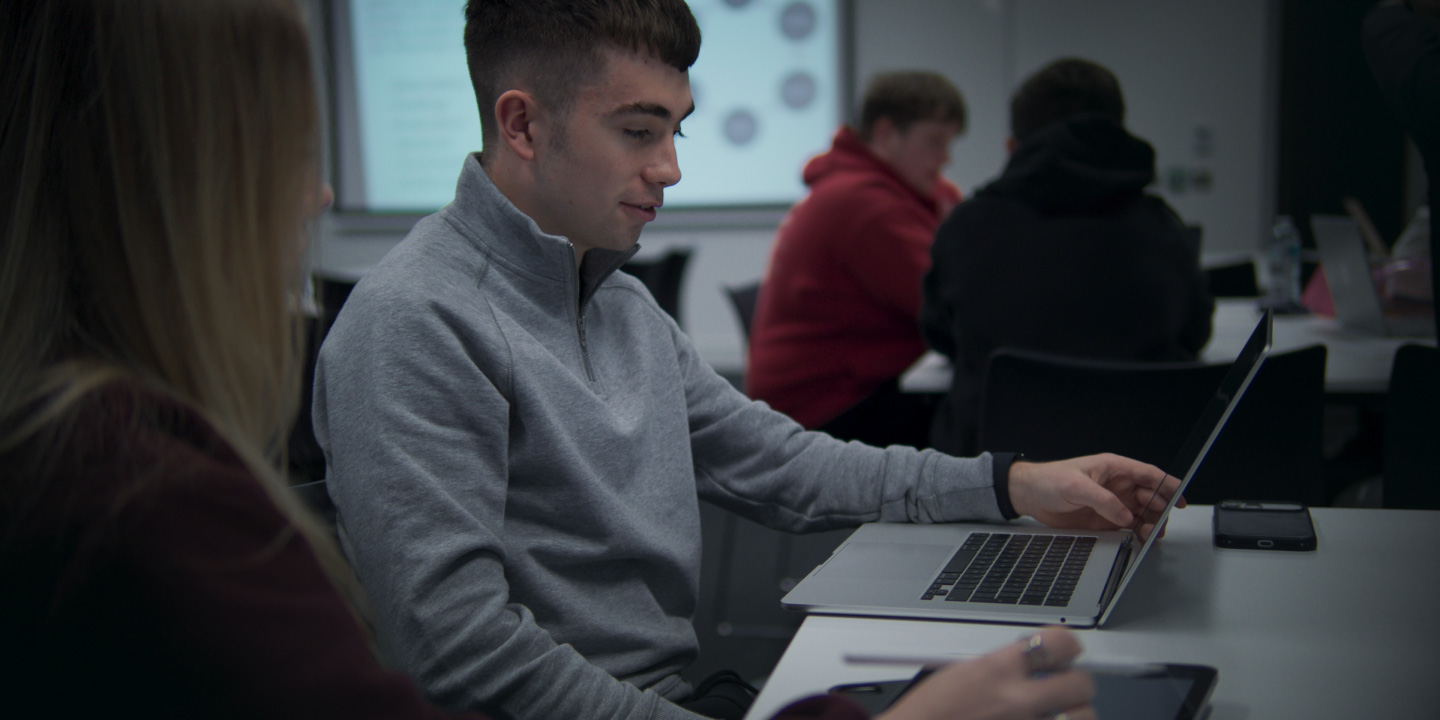
Rory Goss
Studying Business Studies
Ulster University, Belfast, Class of 2029
It’s not about what I've lost, but what I've found: resilience, patience, and an understanding of the crucial role technology can play in accessibility.
One winter day in January 2024, 16‑year‑old Rory Goss experienced something jarring while in construction class at Abbey Christian Brothers’ Grammar School in Newry, Northern Ireland. He could no longer see the whiteboard at the front of the room.
As a straight‑A student in 11th grade, Rory was in the midst of studying for his A‑levels and was about to start applying to university. Passionate about golf and cars, and eager to start driving lessons, he had no idea what was happening to his eyesight.
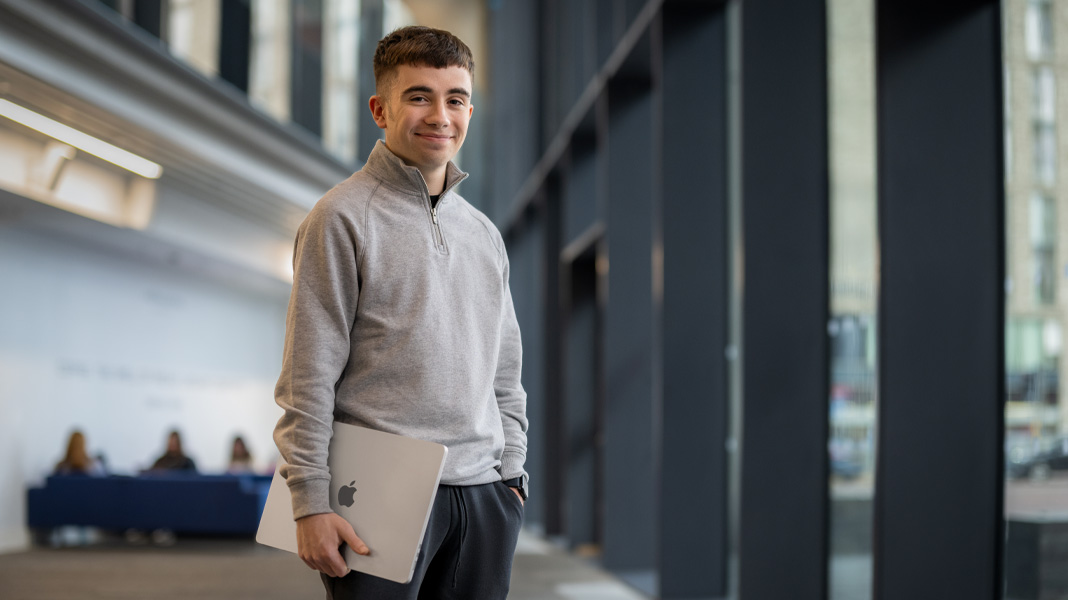
Within weeks, he was diagnosed with Leber's Hereditary Optic Neuropathy, a rare genetic condition that damages the optic nerve and can lead to sudden, severe vision loss. Over the next six months, his vision deteriorated by 95%, meaning he was legally blind as he began his 12th grade exams.
When something like this happens, you can either feel sorry for yourself or you say, 'I’m going to figure this out because there has to be a way.'
While in the hospital, Rory began exploring the accessibility features built into his iPhone. Using Zoom and Larger Text to make content easier to see, and VoiceOver to hear it read aloud, he discovered how technology could be the answer to his future. “For most people, it would be a really, really small thing. But for me it was massive,” he says. “I thought that if I could work out how to use my phone, everything else would fall into place."
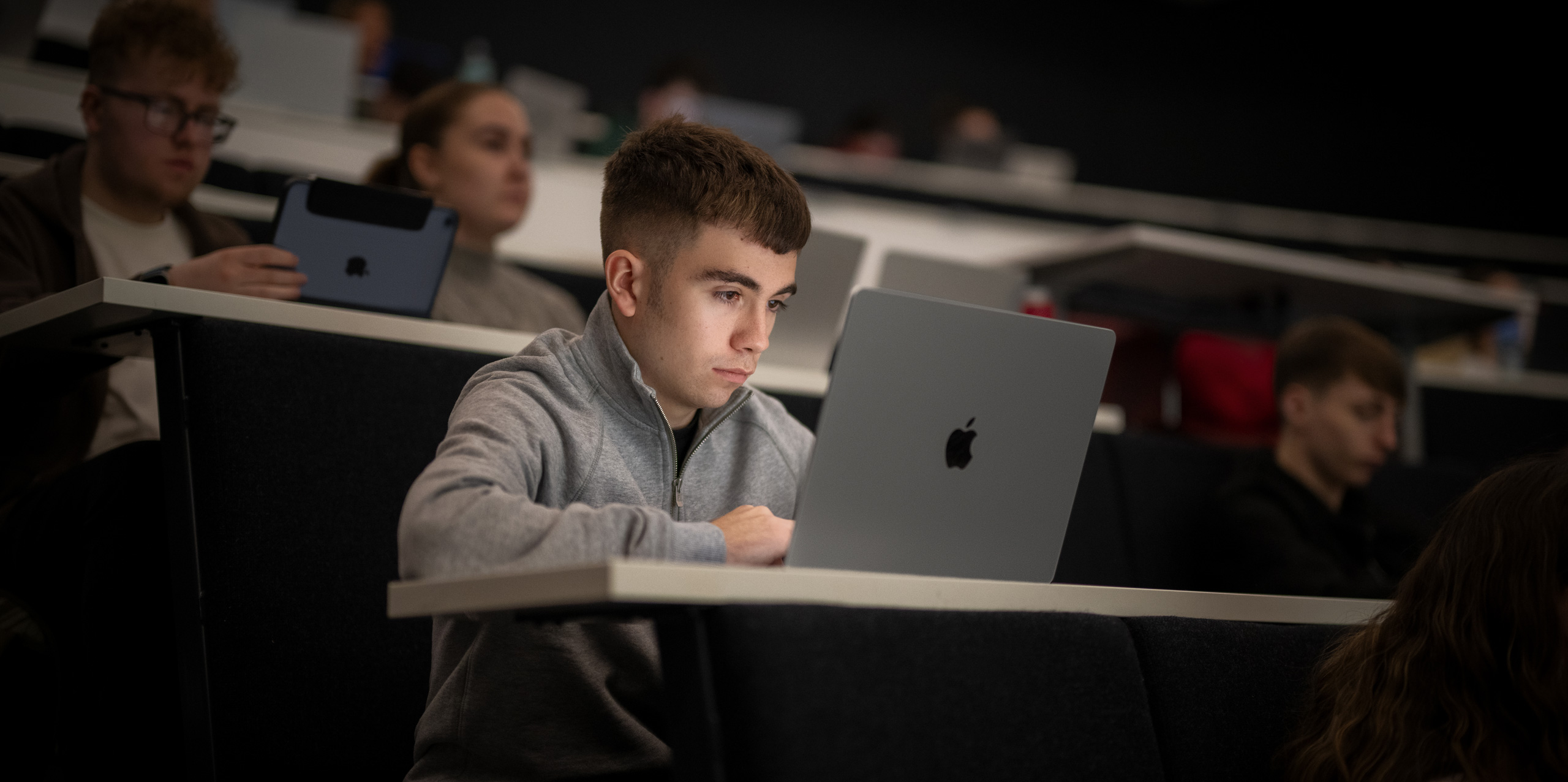
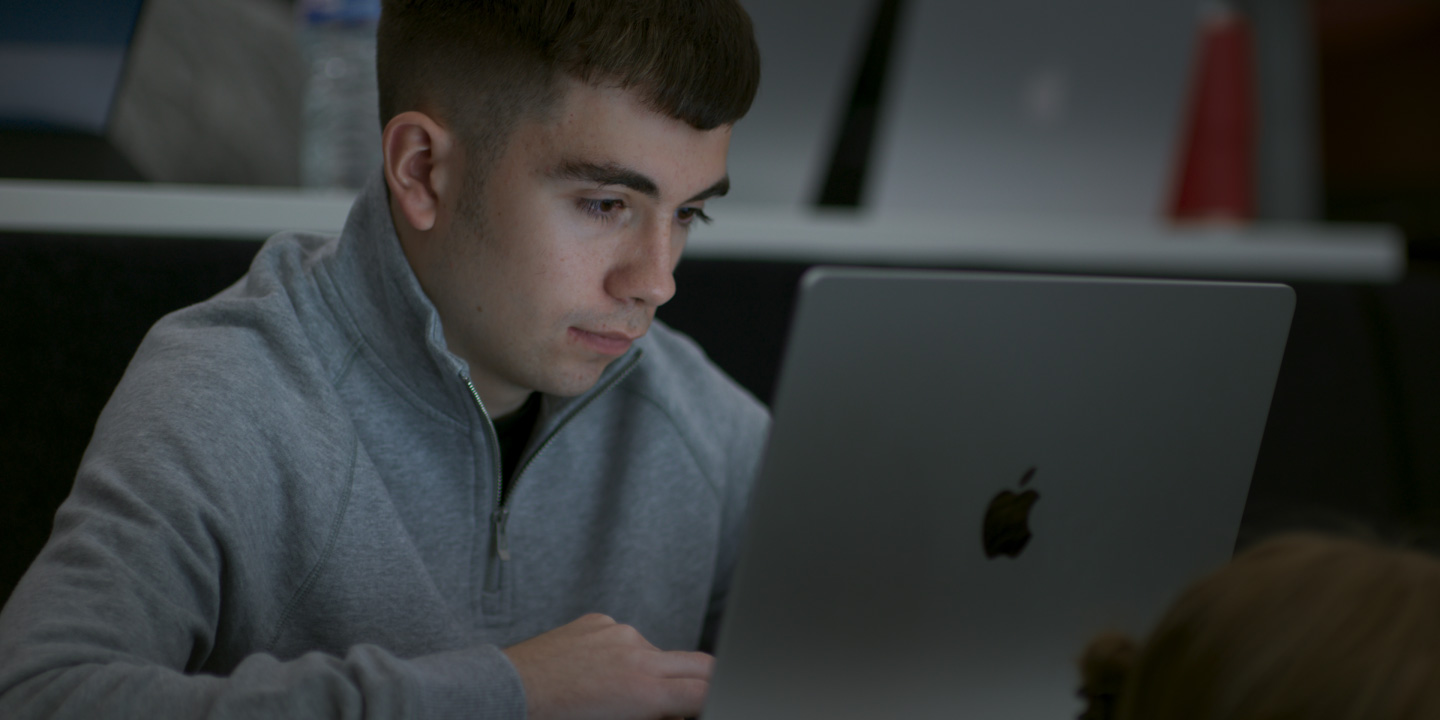
When he returned home, he spent hours familiarizing himself with the built‑in accessibility features on his Mac. He relied on Zoom and Follow Focus to magnify the screen and read copy as he typed. The copy on the high‑resolution Apple Studio Display remained crisp after zooming in. He increased text sizes on apps, and discovered he could scan documents directly from his iPhone to his Mac with Continuity Camera.
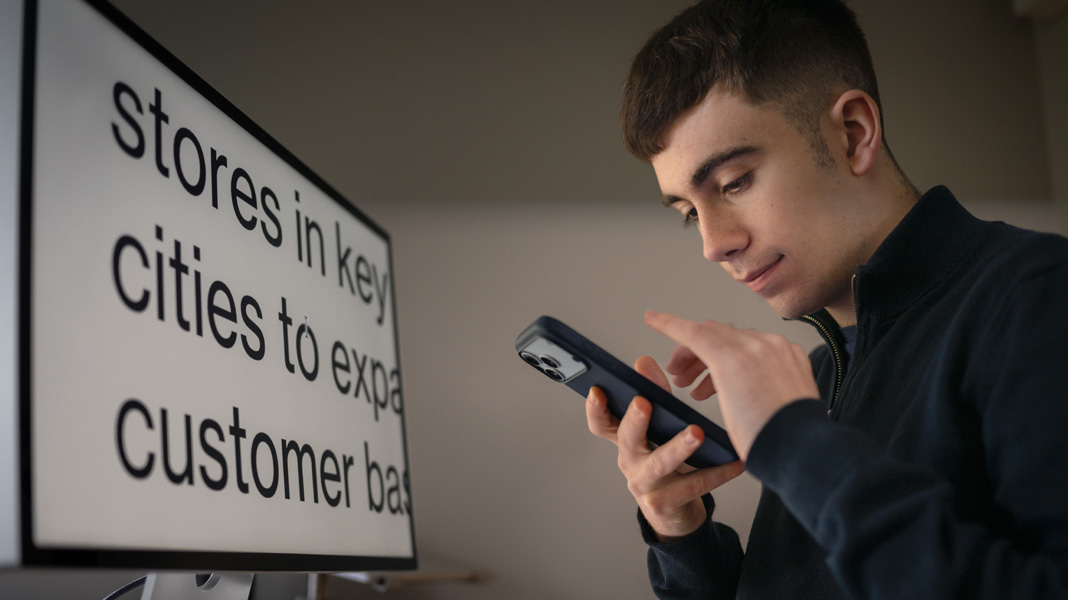
Back at school, these features empowered him to continue learning and excelling steadily. Because the features are cohesive across Apple products he only had to learn how to use them once. He used iPhone to capture information from the board or a classmate’s notes, which would sync with his Mac through iCloud. With these tools, he was able to stay in the classroom and keep learning alongside his peers.
Accessibility with Apple is a starting point rather than an afterthought.
His teacher Phyllis McQuillan attests to the power of accessibility. “Without him having Apple devices, I genuinely don’t think he would’ve been able to complete his A-levels. He was able to take ownership of his learning again.”
For Rory, the confidence and connection it unlocked meant everything. “Technology has been my bridge to independence. It’s allowed me to say ‘I’ve done that, that was all me.’”
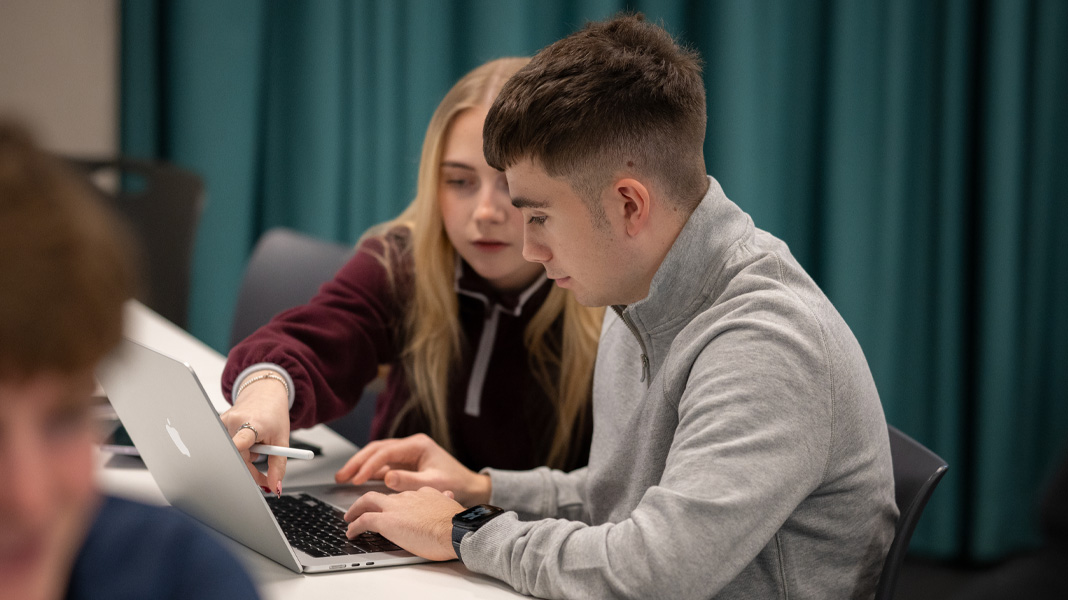
The following year, Rory achieved three A* grades, the highest possible score, and averaged over 90% — among the top in his school. Today, he studies business at Ulster University in Belfast, building a future that once felt uncertain. He continues to rely on his MacBook to help with individual studies and group work. Drawing from his resilience and ingenuity, he proved that with the right tools, potential doesn’t disappear — it adapts.